
Portfolio
John Mackenzie
AI Systems, Cyber Risk, And The Training To Run Them Safely.
Australian AI and cybersecurity specialist. I advise boards, train teams, and build the tools I recommend. Every build is public so you can check the work before you hire me.

My Ventures
Products I Build And Run
BlackSnow Intelligence
You Get Screened Out Before Anyone Calls You.
Reads your website the way procurement teams and their AI do: privacy policy, data protection agreement, and sub-processor list. Free, no account.
CyberTown
Cyber Judgment, Trained Through Real Decisions.
Role-based cybersecurity training built on realistic decision scenarios, with dashboards and evidence exports for governance.
AIEOS
The Governed AI Software Production Environment.
Direct an AI workforce across accounts and providers. Work is split into accountable items, independently reviewed, and nothing reaches Done without evidence.
AIwatx
Measured, Not Modelled.
Measures AI token use on your own machine, applies a published method, and proves the saving against your own baseline. Early access, no public site yet.
LLM Vault
Govern Every AI Interaction. Prove Every Decision.
The governed layer between an organisation and every model, agent, and coding tool it uses: classification, policy gating, routing, review, and tamper-evident evidence.
Business Intelligence Hub
The AI-Enabled Operating System For Leaders.
Map your company, run a governed AI team, and keep every action traced and human-approved. Built for 50 to 250 employee EU companies.
Books
Published Books
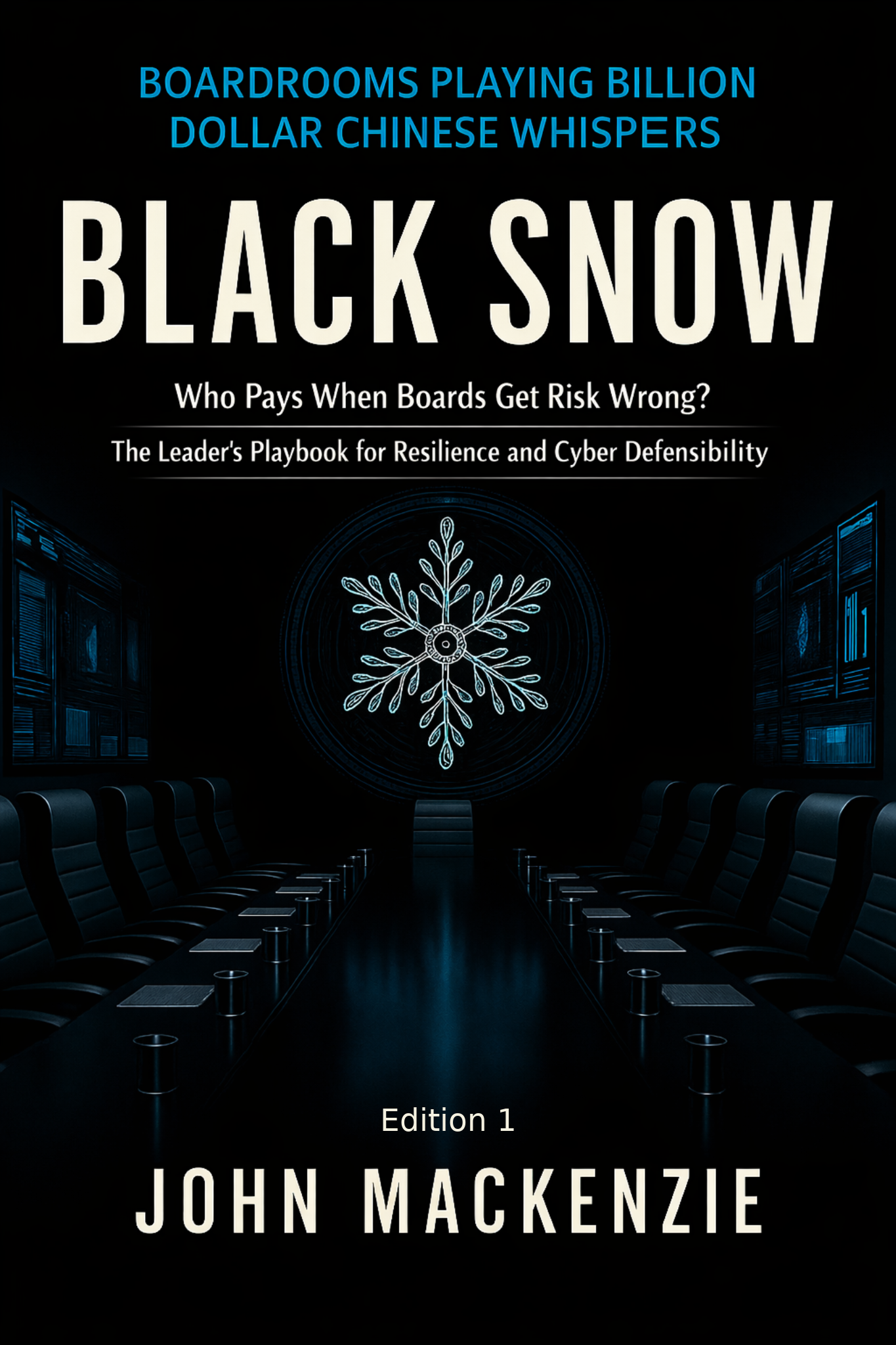
Black Snow: Boardrooms Playing Billion Dollar Chinese Whispers
The leader's playbook for resilience and cyber defensibility — how governance failures cascade and what it takes to build institutions that survive real-world shocks.
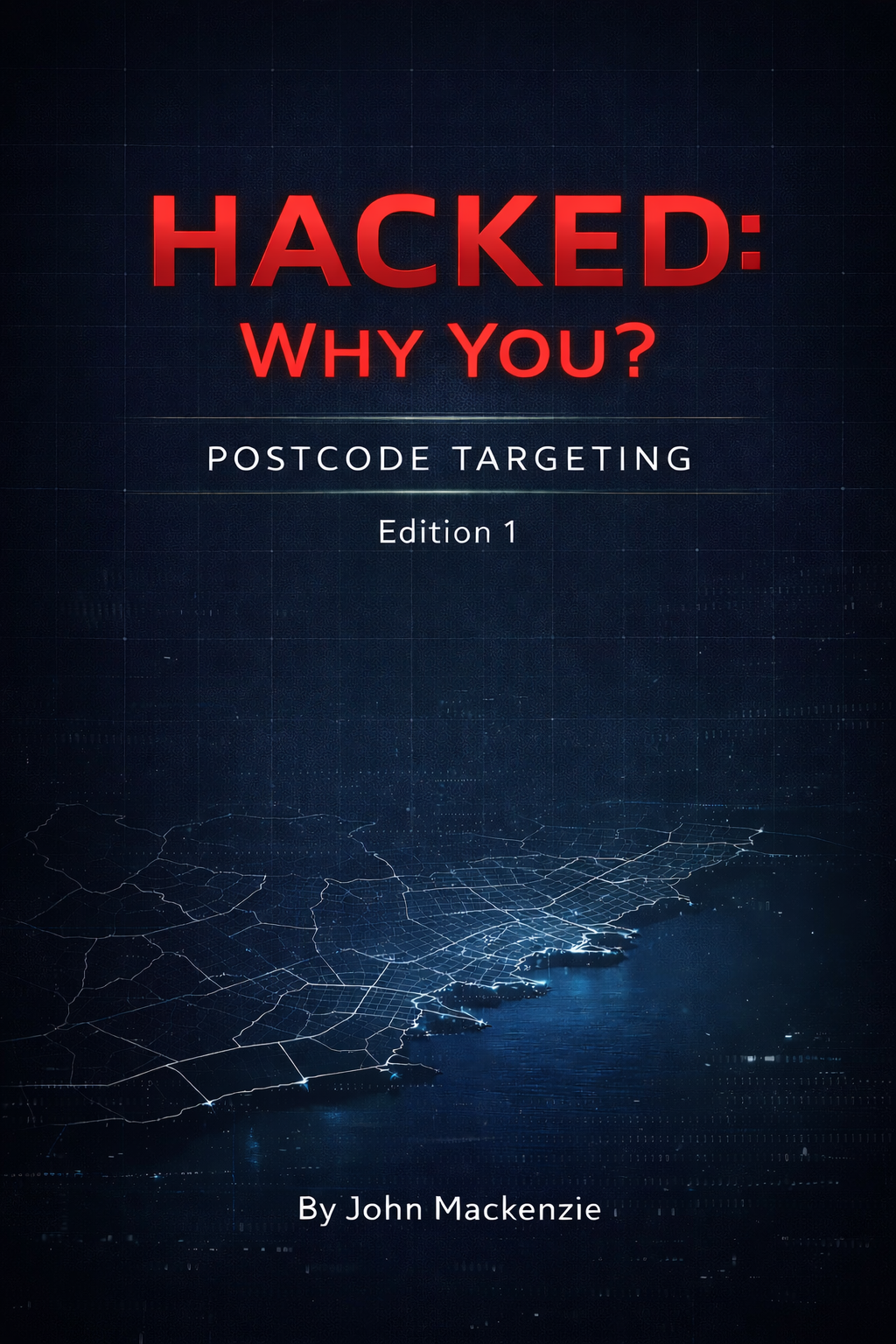
Hacked: Why You? Postcode Targeting
Cybercriminals don't pick victims at random. The mechanics of postcode targeting and the practical steps to protect yourself and your organisation.
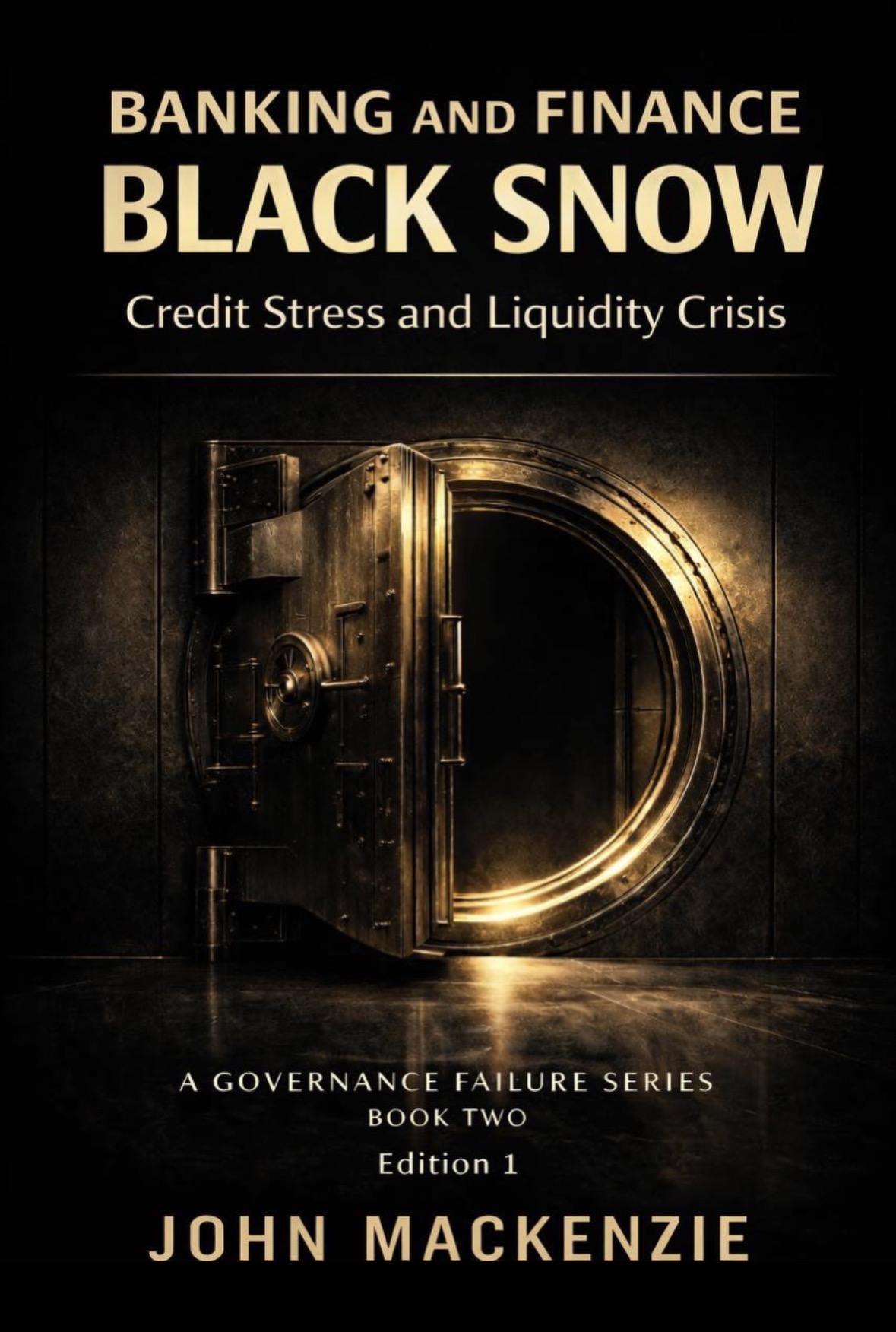
Black Snow: Banking & Finance — Credit Stress and Liquidity Crisis
Volume two of the Governance Failure Series — structural vulnerabilities inside banking and the fault lines between credit stress, liquidity, and governance.
Research
Research Papers
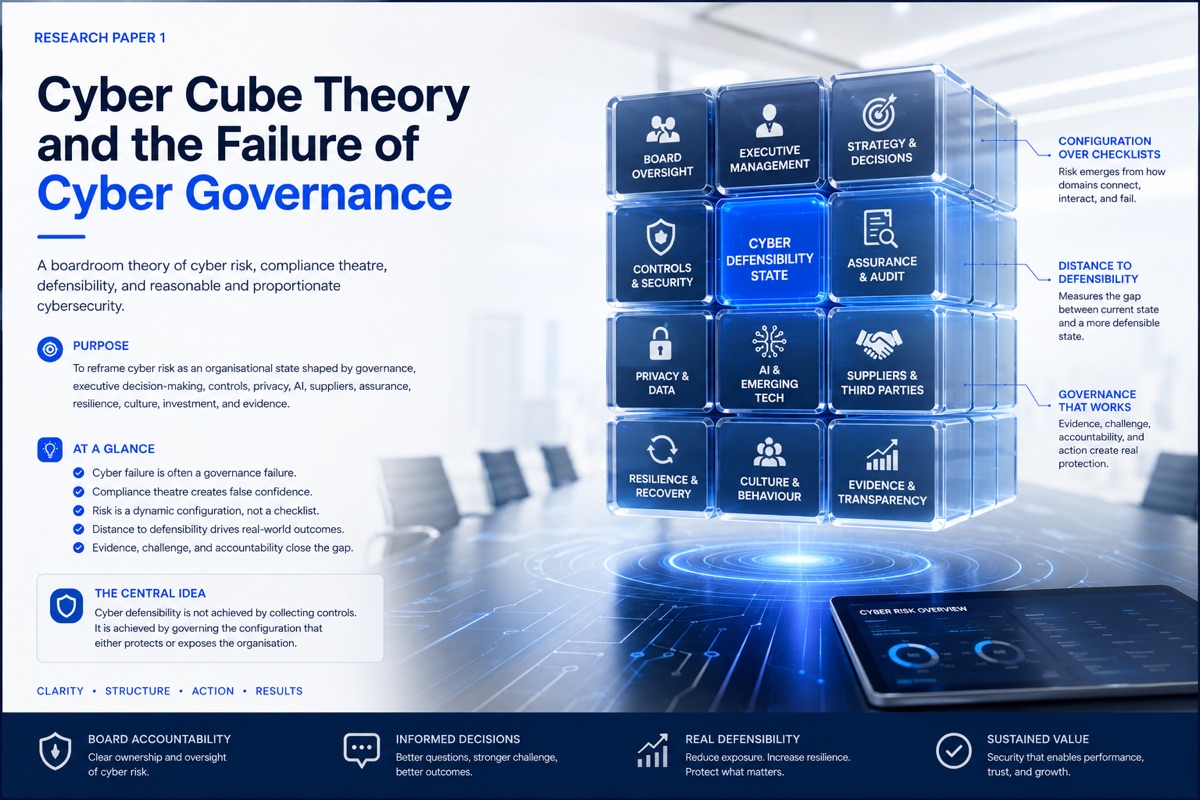
Cyber Cube Theory and the Failure of Cyber Governance
Cyber Cube Theory reframes serious cyber incidents as organisational governance failures, not just technical failures. It examines how board oversight, executive management, control reality, assurance quality, privacy, AI, suppliers, and evidence combine to shape cyber defensibility.
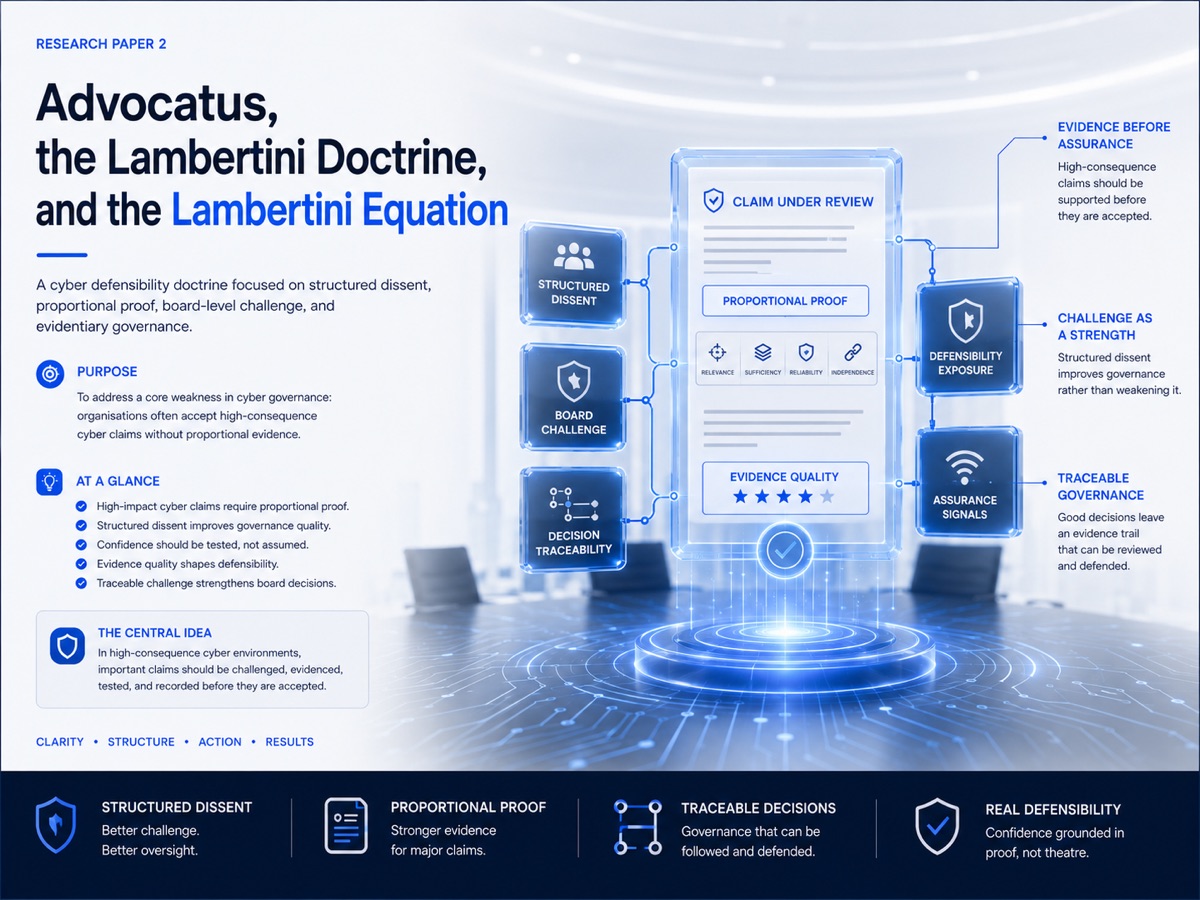
Advocatus: Institutionalising Evidentiary Governance in Cyber Defensibility
Advocatus introduces a board-level challenge architecture for cyber defensibility. It examines how high-consequence cyber claims should be tested through structured dissent, proportional proof, evidence quality, and traceable governance decisions.
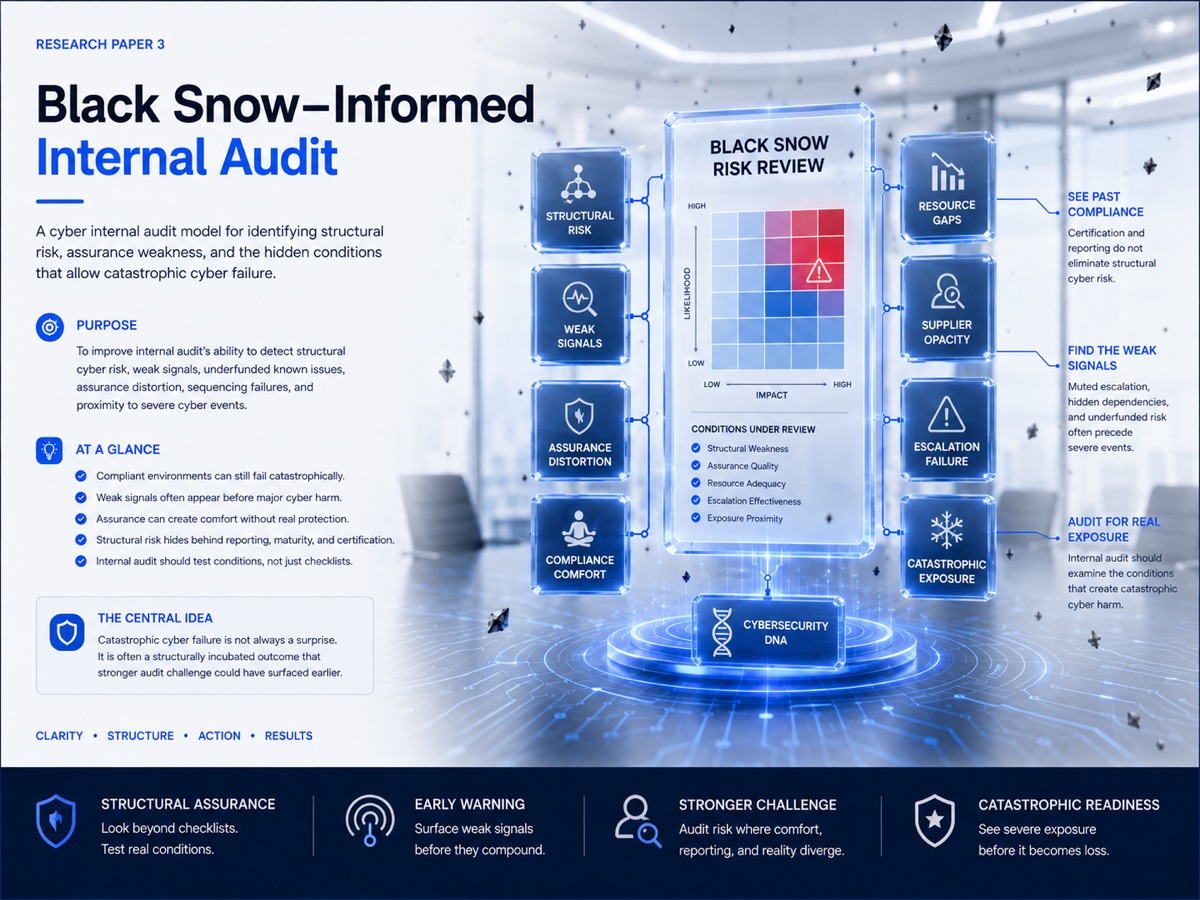
Black Snow–Informed Internal Audit
Black Snow–Informed Internal Audit examines why compliant organisations still fail. It reframes internal audit around catastrophic cyber risk, weak signals, sequencing, culture, resource allocation, assurance distortion, and structural proximity to severe cyber harm.
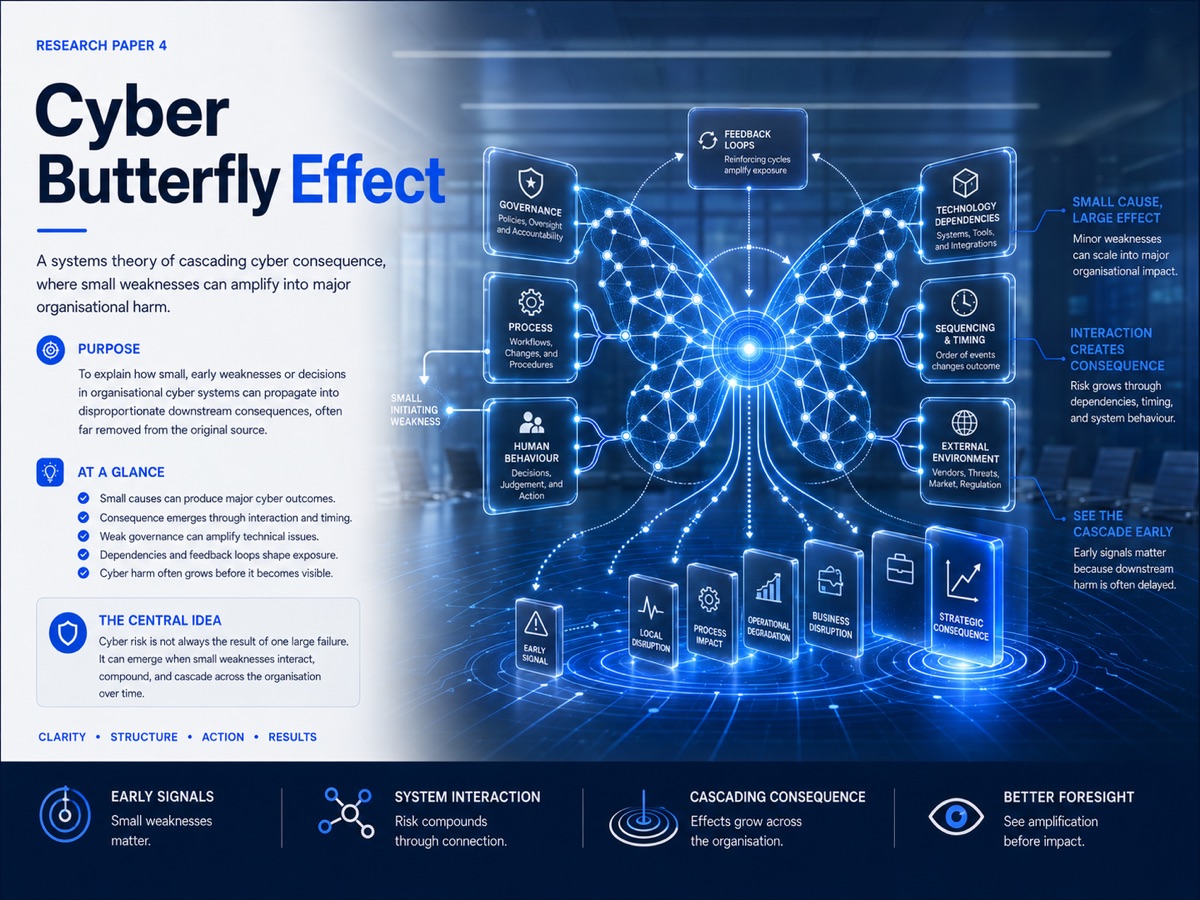
The Cyber Butterfly Effect
The Cyber Butterfly Effect explains how small tolerated weaknesses can move through an organisation’s cyber DNA and eventually create disproportionate harm. It focuses on micro-causation, hidden weakness, supplier opacity, behavioural adaptation, and assurance failure.
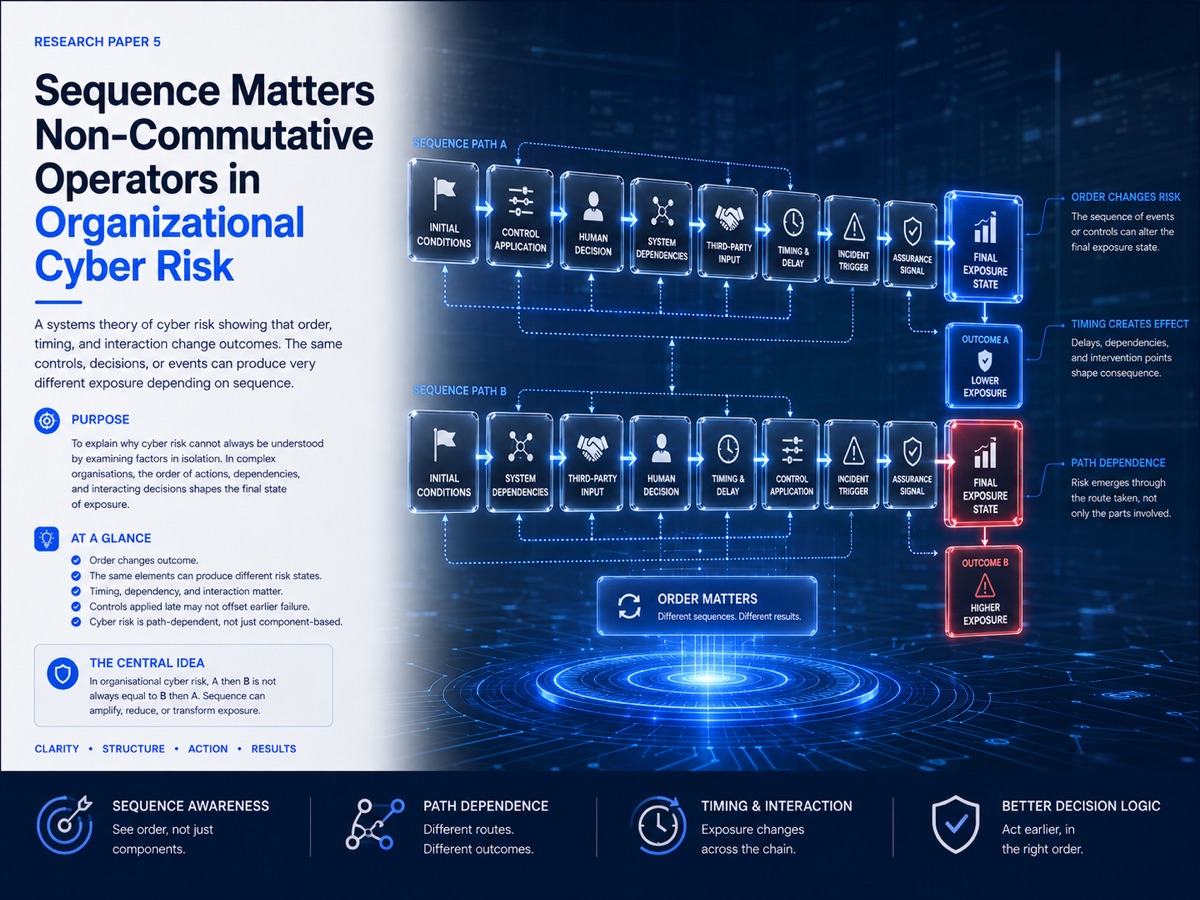
Sequence Matters: Non-Commutative Operators in Organisational Cyber Risk
Sequence Matters argues that the order of cyber interventions changes the risk outcome. It examines how controls act on technical, behavioural, and symbolic organisational states, making cybersecurity sequencing a first-class governance variable.
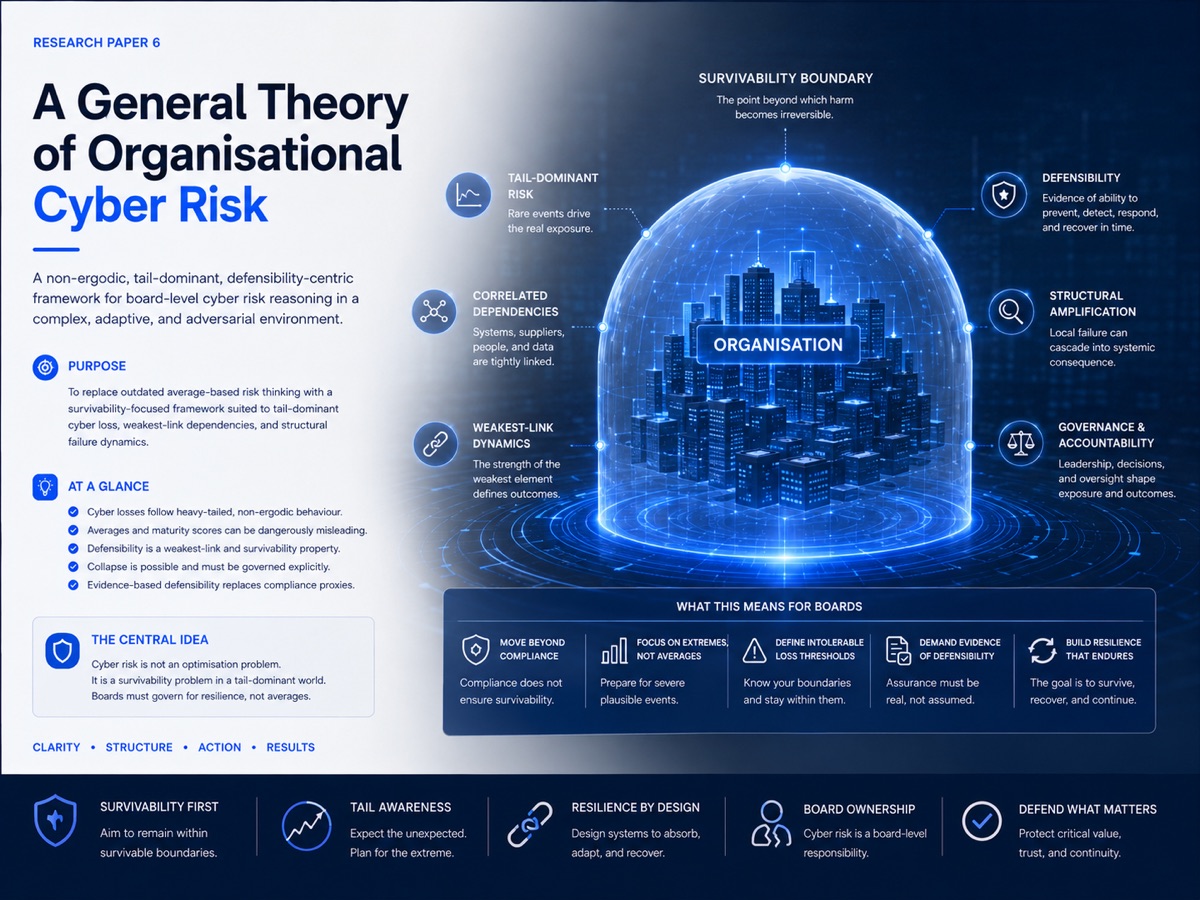
A General Theory of Organisational Cyber Risk
A General Theory of Organisational Cyber Risk reframes cyber risk as a survivability problem in a tail-dominant environment. It challenges expected-loss thinking, compliance proxies, averaging, and weak board-level assumptions about cyber defensibility.
What I Do
Hire Me For One Of Four Things
AI Concierge
One repetitive task handed to AI, with a person approving every output. Starts with a free assessment.
See The Concierge OfferCyber & AI Risk Advice
Governance and risk work for boards and regulated firms, grounded in ISO 27001 and ISO 42001.
See The MethodsStandards Training
Certified training for teams and leaders on AI governance, information security, and continuity.
See TrainingResearch & Books
Six papers and three books on cyber risk, governance failure, and boardroom accountability.
See ResearchSelected Builds
Work You Can Open Today
Traffic Engine
Digital growth infrastructure
Build digital visibility assets that keep working after the first click.
In developmentApp BluePrint
Product planning & app specification
Turn an app idea into a structured build plan.
ConceptAgentWindow
AI oversight & agent visibility
See what your AI agents are doing before their actions become your risk.
ConceptPublicSignal
Public signal intelligence
Track the public signals that matter before they become obvious.
ConceptMyCyber
Personal cyber risk & digital safety
Personal cybersecurity made visible, practical, and actionable.
ConceptSpiritDeck
Reflection, decision support & guided action
A digital deck for reflection, clarity, and guided action.
ConceptMyWork
Work intelligence & execution support
Turn scattered work into structured execution.
ConceptEntity Overwatch
Cyber intelligence & organisational defensibility
Cyber intelligence for seeing organisational fragility before it becomes visible failure.
Major projectCareer
Where The Experience Comes From
- 2015–2017Australian Government Business Advisor, AusIndustry Entrepreneurs' Programme
- AusIndustrySupply Chain Facilitator across oil, gas, mining, and manufacturing ($40B+ in projects)
- AdvisoryCyber risk and governance advice to 14 billion-dollar organisations
- TrainingAustralian Government Certified Trainer (Cert IV TAE); founder of JMac Learning
- NowFounder of JMacTech, building AI and cyber products in public
ISO Credentials
Audited To The Standard
ISO 27001 — Information Security Management
Foundation · Internal Auditor · Lead Auditor · Lead Implementer
ISO 9001 — Quality Management
Internal Auditor
ISO 22301 — Business Continuity
Foundation · Internal Auditor · Lead Auditor
ISO 42000 — AI Management
Foundation · Internal Auditor · Lead Auditor
ISO 20000 — IT Service Management
Foundation · Internal Auditor · Lead Auditor
Start With One Task
A free 30-minute assessment. You leave with the task named and a one-page next step.
Book The Free Assessment